Monday, September 27, 2010

Some Men Who Loved Nature: Part 3


Guest post by Jerilee Wei
(click here to view Parts 1, 2, and 4)

Great naturalists are also great spokesmen and great conservationists, long after their time on this earth. Three of those naturalists that contributed the most to the American public are John Macoun, John Muir, and John Burroughs. They are naturalists who are still making a difference today.

Let's Take A Look At Their Lives And Contributions

John Macoun
John McCoun and son
The distinguished Canadian explorer and naturalist, John Macoun (183201920) was born in Ireland, but migrated to Canada when he was eighteen. After a few years of farming he became a school teacher, at a salary of fourteen dollars a month. In his spare time, he studied the different sciences, but his special love was studying plants.

When an expedition was sent across the prairies and the Rocky Mountains to find a route for the Canadian Pacific Railway, Macoun went along as a botanist. In the following years he made journeys of scientific exploration all over Canada from the Yukon to Nova Scotia.

His two sons, William and James, were often his companions and scientific co-workers. Macoun's collection of animals and plants were the foundation for the Victoria Memoral Museum in Ottawa. Other scientists honored Macoun by naming species of plants, insects, and fish after him.


John Muir
One of the policies of which both the United States and Canada are most proud is the establishment of national parks to save some of the marvelous beauties of nature for the people of all time to come. A great fighter in this cause was John Muir, born at Dunbar, Scotland, in 1838.

When he was eleven years old, the family came to America and settled on a backwoods farm in Wisconsin. John plowed, chopped down trees, and did all the other kinds of farm work, and enjoyed it. However, even while plowing he was also enjoying the beauty of wild flowers and trees, and the antics of wild creatures. John was the best plowman in the neighborhood. Once he dug a ninety-foot well without assistance.

John Muir
John's father had very different notions about reading from those of other Scotsmen, like the father of William Dawson. Muir's father objected to his boy's sitting up late at night to read. However, he finally told John that he might get up as early as he pleased and read then. So John would get up at one o'clock in the morning and read, or work on mechanical inventions until time for the day's work to begin.

When John entered the University of Wisconsin, he had to provide his own living expenses. He often lived on fifty cents a week. An accident nearly blinded him after leaving the university. This determined him to travel and see as much of "God's beauty" as he could before what was left of his sight was completely gone. Fortunately, he did not lose his sight.

In his travels Muir wandered through thousands of miles of prairie, mountain, and forest. He tramped the Sierra Nevada Mountains until they were as familiar to him as the farm where he was raised. Muir's journeys were made for his own pleasure, not to get material for books.

After his marriage to Louise Wanda Strentzel, the daughter of a Polish revolutionist, he took up fruit farming. Near the end of his life he began to write books that make all nature lovers want to repeat Muir's wanderings.

Muir Woods, a forest of gigantic redwoods across the bay from San Francisco and Muir Glacier in Alaska are named for John Muir. It was largely due to Muir that the Yosemite Valley became a national park.

Muir did not dislike city life, in fact, he had considerable inventive genius and liked the turmoil of factories. It was simply that he loved nature more. Several universities invited Muir to accept professorships, but his reply was always that there were already too many men teaching things that they had learned out of books. He died in 1914.


John Burroughs
When President Theodore Roosevelt took a trip through Yellowstone National Park, he chose as a companion, one of America's best loved students of nature. This was John Burroughs, called "John o'Birds" by his friends.

Burroughs was born near Roxbury, New York, in 1837. In his youth he tried farming, fruit raising, teaching, journalism, and then for nine years was a clerk in the Treasury Department at Washington, D.C. During all these years he spent his spare time in studying nature and in writing about it.

In Washington, he became friends with Walt Whitman, and his first book was Note on Walt Whitman As Poet and Person.

John Burroughs and Teddy Roosevelt
Beginning with Wake Robin in 1871, Burroughs published a series of books on flowers, birds, and other wildlife that have caused him to be regarded as the successor of Thoreau as a writer on nature.

Later in life, Burroughs engaged in fruit farming at West Park, New York, where he worked in a cabin built on a hill near his house. This cabin, Slabsides, became a center for visitors from all over the world. Burroughs died in 1921.
If You'd Like To Know More!


* Best American National Parks
Are you one of millions who enjoys the natural wonders and pristine beauty of nature? Plan a trip to a National park near you today. There are more than 300 parks nationwide here in the United States;. many...
* Best Hiking in California
California is not only a gorgeous state but also a state which offers the hiking fan a terrific range of different scenic opportunities. Hiking along the coast offers fabulous vistas of the Pacific Ocean...
* Best Yosemite National Park Sightseeing
Yosemite National Park contains some of the greatest sightseeing opportunities available in the United States. Yosemite was a centerpiece and main arguing point for bringing about the National Park Service,...
* Hiking Rae Lakes Loop - Sequoia & Kings Canyon Natio...
The Rae Lakes Loop is one of the most popular backpacking trips in the Sierra Nevada mountains of California in Kings Canyon National Park. This loop hike is 46 miles long, and climbs from 5035' (1535m) at the...
* The 5 Best California Weekend Getaways
Looking to get away for the weekend in California? Here are my five best recommendations for California weekend getaways: Tahoe, San Diego, Hwy 1, Yosemite and Northern California hot springs.
* Winter Driving Tips in Yosemite National Park
Yes, Yosemite National Park is open in the winter! The road conditions can change hourly, and chains are often required, so read this article for information on how to be prepared for your winter trip into Yosemite.
* Yosemite National Park in California with Pictures o...
Several years ago a friend and I spent several days hiking and exploring in Yosemite National Park in California. Many pictures were taken and a good share of them will be shown in this hub about our...
* Yosemite National Park Travel
Yosemite National Park is a national park in east California, United States. The park is spread over almost 800 000 acres of land. In 1984, it was designated as a World Heritage Site. The park is globally...


If you enjoyed this post, please consider leaving a comment

Saturday, August 14, 2010

Stars without makeup

.....but are they really?

A couple of weeks ago, there was a big to do about celebs going without makeup. It all started with Jessica Simpson who did an au naturale photo shoot for Marie Claire, saying, basically, that she was confident in her own self and didn't care what other people thought. Personally, I think she is soooooo much better looking without her makeup.

The Today Show decided that they would go bare-faced for a day. And of course other celebrities have been sporting the natural look as well. Now, sure, this is not really a new thing, the going without makeup, but those who just simply wouldn't (because of their television status) did. Kudos. Awesome. They handled it well. It was wonderful to see. And they got more and more comfortable as the show went along. And they also talked about other female celebrities that were and had been, doing the same and why.

Now, unfortunately, it seems to me that they didn't exactly follow the rules all the way. The eyes and the lips told a different story to me; and in some cases I questioned skin tone. Now it could have been that they've been wearing makeup for so long that their eyelids and lashes and lips were stained. Or maybe their lips, lids, and/or lashes were tattooed (can you tattoo lashes?). Doesn't really matter, and it was sort of sad to me that some of these women (one in particular) couldn't seem to show her all the way bare true self, even for a morning.

What do you think? Am I just seeing things?


If you enjoyed this post, please consider leaving a comment

Creative environments

There is virtually no problem you cannot solve, no goal you cannot achieve, no obstacle you cannot overcome if you know how to apply the creative powers of your mind , like a laser beam, to cut through every difficulty in your life and your work.


Creativity defined
A new idea is often a combination of old elements. Creative people are able to devise new combinations depend on your ability to discern relationships between seemingly disparate items; to fine the juxtaposition of ideas which were previously thought to be unrelated.' They have the ability to combine ideas in a unique way or to make useful associations among ideas.

Work in a creative environment
The perception of creativity itself is slowly but surely transitioning into a mutated and adapted life form. In the traditional world, a “creative” person usually meant someone with talent excelling in a specific creative discipline defined by fairly concrete parameters. Copywriters write copy. Art Directors direct art. Talented visual designers who can make anything look good. Brilliant copywriters who can come up with that magnificent tag line which stops you in your tracks. And don't forget Information Architects who devote their existence to usability and being an advocate for the end user. To be around other creative people who understand where you're coming from, is exhilarating. Creative people need stimulation.


Design schools offer a variety of specialties in creative arts

Just about all reputable and accredited design schools offer on-line programs. If you're serious about becoming a professional in a creative field, you can find yourself with a degree within a couple of years, depending on the amount of time you have available to spend learning. Taking classes from home definitely has its advantages.

Finding a way to make this happen

One of the things to consider when searching for a new education program is the cost. Most online colleges offer the same financial aid programs as traditional colleges, so make sure to ask about these. They will assist you in securing the financial support you need to move ahead with your education. Regardless of your income or financial situation, you may qualify for financial aid programs that can make your education affordable. Another consideration is the time involved.

Making an informed choice

There are a wide variety of design schools that offer on line programs. Before picking one, you should spend some time comparing some of them to get an idea of differences in terms of tuition and programs. It's fairly easy to find schools on line that can offer you a high quality education, so be sure to request information from more than one. If you take classes on line, it doesn't matter where that college or design school is located, so you can select one of the best. Be sure that the schools you check out and consider offer the kind of programs and classes you're interested in.

A smattering of the kinds of design specialties most design schools offer

If you are creative, you probably will do well in any of the following areas.  Most design areas are pretty closely related, and it's possible to cross over from, let's say graphic design to fashion design or vice versa, making finding jobs a little easier. If you are passionate about one particular area, then go for it. Talent and skill combined with passion is a win-win situation.

  • graphic design
  • web design
  • fashion design
  • Interior design
  • multimedia and animation
  • professional photography
  • film and video


If you enjoyed this post, please consider leaving a comment

Thursday, August 5, 2010

Summer reading

It seems like half of the country is steaming in the extreme summer heat this year. Here in Kentucky, we have had day after day of temperatures in the high nineties, with heat indexes in the hundreds. Everyone is looking for ways to stay cool.

Yesterday we had a power outage. Fortunately it only lasted for three hours. I was scared it would be longer; it's happened that way in the past.  It's especially bad for me because I run a bed and breakfast. What are you going to do with 8 guests, no light, no TV, and no air conditioning? Well the answer is "creative problem-solving" and the remedy is exhausting.

First thing I do is gather up all the candles in the house and some matches, enough so that every room has one of two. Then make a giant pitcher of ice cold lemonade, which I keep in the frig as long as possible. Then I tell my guests to sit quietly, if possible or go out to dinner or lunch, depending on the time. If they decide to stay here, and have a computer, they can watch a movie which will make the time pass a little faster.

Thank goodness the power outages don't happen too often cause, of course, reading during one would be next to impossible unless you like to read by candle light.  But staying cool in ninety degree weather, although requiring a little thought, is possible. I find that if I stay inside...no errands....no visiting friends, and sit or lie in one place, I can stay a lot cooler. To entertain myself I have my computer, my TV, my CDs and DVDs, and of course lots of books.

Reading a good book can be a joy. We've gotten so used to our TVs and computers it seems, that book reading is usually the last thing we think of. However; Amazon and other online bookstores advertise a fine selection of books for summer reading. I put together a great group that just may have some appeal to you. See the carousel below.


If you enjoyed this post, please consider leaving a comment

Monday, August 2, 2010

Sanctuary: A guest post by Rebecca Rasmussen

Rebecca Rasmussen is the author of the novel The Bird Sisters, forthcoming from Crown/Random House April 19, 2011. She lives in St. Louis with her husband Hans and daughter Ava Lily, and teaches writing and literature at Fontbonne University. Visit her at http://www.thebirdsisters.com/ or at http://thebirdsisters.blogspot.com/

Wild Spirit Wolf Sanctuary in New Mexico offers an alternative to euthanasia for the captive-bred wolf, an animal of grace, intelligence and mystery; a symbol of what is wild and free, yet forced to live in captivity in a world obsessed with possessing a part of that wildness.

*note:"If you’re interested in helping wolves –today’s topic – please visit this wonderful organization"  http://www.wildspiritwolfsanctuary.org/

As a guest writer, Rebecca tells us about her new novel, Sanctuary: "The reason I began writing this second novel about wolves is because sometimes I think we, as a population, are so focused on protecting our families – Are the kids reading enough books and eating enough leafy greens? Is my husband taking his cholesterol medicine? What time is soccer pick-up again? Are the kids looking both ways before they cross the street? – and we often forget (I do this all the time! Guilty. Guilty. Guilty.) that there is an entire world that would benefit from that kind of staunch protection. 
I wonder what would happen if we took care of our animals and our earth, if we asked of them half the questions we ask ourselves and our families on a daily basis, whether or not the precarious state of our wild animals, our old growth forests, our rivers and lakes, would be any different than it is today."


Excerpt from Sanctuary: A novel-in-progress
by Rebecca Rasmussen
     Chana turned up in our vegetable garden on a cool June morning. Her stunning Arctic coat was blackened by old blood. At first, we thought her wounds—the blisters and lesions on her hind legs and buttocks, her exposed ribs—had been inflicted in the wild. But when Chana finally allowed Lee to come into the garden, on his hands and knees, he saw the spiked collar embedded in her fur, a cardinal sign of domestication and abuse. What we didn’t know then was that she’d traveled nearly two hundred miles from her home in Elk Springs or that her owner had kept her on a two-foot chain since she was a pup and visited her with his steel toe boots each time he lost his temper. The way he figured, or so he said in court: beating a wolf was better than beating his wife.

     After we’d successfully adopted Chana, Lee and I heard about the others. There was Bruno, whose owner had struck him with a tire iron at a trailhead in the Medicine Bow Mountains because he wouldn’t get in the car. There was Stella, who’d been tranquilized by an aerial hunter in Alaska and brought to an irresponsible breeder in Colorado. There was Mr. Shyloh, Coco, and Whitney—all awaiting euthanasia at Animal Control in Fort Collins—and hundreds of wolves and wolf dogs just like them all over the country. And there was Ishi, a skittish Timber/Malamute hybrid, brought to us by a man who said if we didn’t take her, he would drive Ishi down the road and shoot her. We did what we could.

     Neither of us had experience with wild animals, though Lee was much more of an adventurer than me. I was the kind of person who read books about bears and mountain lions, but did not welcome the opportunity to encounter either on a hiking trail. As far as pets went, I’d grown up with the usual: a cat, a dog, a fish, and a hamster. Unusually, however, each of our pets was eventually “liberated” from its enclosure. When I was eight, I remember my mother taking Henry, my hamster, and me to the forest preserve and convincing me to let him go.

“You want Henry to be happy, don’t you?” my mother said.
Yes.
“And want him to be free, don’t you?”
Yes.
“And you love him?”
Yes. Yes.
“Then you know what to do, Adie.”

     In one graceless motion, I took Henry out of his cage, kissed him ceremoniously, and sent him to his death.
When I was old enough to understand what had happened, I was also old enough to understand that, in Henry’s case, I was as much to blame as my mother. I loved Henry because he was cute and fluffy and little. I loved him because he drank water out of a bottle, like a baby. I loved Henry as though he was a stuffed animal, which, along with my mother’s loathing to clean his cage, sealed his fate, for which I have always felt sorry.
He was just a hamster, people have told me.
They were just wolves.


If you enjoyed this post, please consider leaving a comment

Wednesday, July 28, 2010

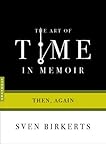
Before you write a memoir: think about this


What the Hell Is Memoir: The Debate Is Ongoing….
a guest post by poet and writer Jenne R, Andrews

You can find Jenne and her insightful posts on her blog: Loquaciously Yours

Today I stumbled across a discussion on a thread in the Memoir Group on She Writes about the difference between memoir and autobiography which necessarily addresses the issue of what memoir is and isn’t. Hope Edelman, author of the best-selling The Possibility of Everything weighed in, ably giving the distinctions and definitions currently– and to me quite unfortunately– in vogue. Here is my reply; please Fed Ex me some band-aids for the fall-out (jra)

“Hope’s comment is germaine in my view: “This is what was once meant by “memoirs” with an S, as in “I’m writing the whole story of my life from the point of age and wisdom I’ve finally achieved.” A memoir is a more artfully rendered narrative that’s informed by memory and the author’s interpretation of events. Emotional truth is often as important, and sometimes even more desirable than factual accuracy. (Don’t shoot me, journalists! But this is true.)” –Hope Edelman.

I do take issue with “This is what was once meant…”– some of us still view “Memoir” this way. With respect to Ms. Edelman’s definition of memoir as an “artfully rendered narrative that’s informed by memory and the author’s interpretation of events” there is an implied assumption that a given narrative is art as opposed to the unadorned journal of catharsis it often is. Regarding the labored construct of ”…artfully rendered narrative informed by memory…” Ms. Edelman’s own memoir, The Possibility of Everything, was penned in the wake of taking her daughter to a purported healer in Mexico. She must mean memory across the spectrum– encompassing very recent memory, that which is recalled in the wake of experience. By that definition everything one writes that is not in the present tense is memoir. ”Factual accuracy” is another problematic phrase; we wouldn’t read memoir if we didn’t think we were reading a true story and a true story depends on fact. ”Emotional truth” cannot possible be truth, as what one lives is experienced subjectively.

In any event, the “memoir” boom set in motion by Mary Karr’s The Liars Club and Frank McCourt’s Angela’s Ashes– although a number of wonderful contemporary autobiographical, memoir-ish narratives preceded that book such as Patricia Hampl’s A Romantic Education– has seen a shift in how memoir is defined.

In fact, the word has been hijacked to legitimize a recent– as in the last twenty-five years– sub-genre–if we can even dignify it all by calling it a genre– of personal confession/revelation, much of it by writers younger than those one might traditionally view to possess the sufficient perspective to write “memoir.” Accordingly, I am going to use the phrase “autobiographical narrative” to discuss what others call “memoir” in the remainder of this essay.

Numerous advocates of AN claim, and Ms. Edelman so alludes, that its objective is to locate one’s “personal truth”. I advocate for something more exact than the term “personal truth” to characterize what the best of autobiographical narrative in current favor offers– something along the lines of ”realization”, even “epiphany” that on a good day, resonates with with the reader.

It appears to me that if “truth” finding is the mission, the matter of whether one is creating literature or not falls by the wayside. Further, in permitting ourselves to consume so much pulp nonfiction, we have created a market for it. We have become voyeurs, and we love that window into someone else’s private life– even to climb in the window and rummage through the underwear drawer. If the voyeuristic appetite did not exist, neither would AN.

Another attempt to legitimize autobiographical narrative has come about in the plea for redemptive endings. Understandably agents, editors and critics are tired of reading grueling personal stories that dead-end or in the words of Erin Hosier (She Writes’ resident agent) keep getting worse. ”Where’s the hope?” she writes. Great memoir across the ages has not depended upon a redemptive ending. It has depended upon the quality of the telling of the story.

For a time the phrase “creative nonfiction” was applied to personal narrative and still is as a genre for the M.F.A. But the abandonment of the goal of the creation of a work of art/literature, the sacrifice of the vision for the extraordiness of the ordinary that characterizes art for the temporal reward of a purge, has meant that creative nonfiction has itself descended to the level of autobiographical narrative. In turn there is a further descent into “expose’”– the salty opportunistic and exploitative accounts of someone else’s private life also in favor.

I just finished writing a memoir of a trip I took thirty-seven years ago (Nightfall in Verona, sample chapter here). In the epilogue I say that I could not have written it any earlier– I was too close to the story and some of the things standing in the way of/eclipsing my appreciation of the experience had not yet healed and dissipated. A degree of distance gave me the ability to paint with a full palette, to incarnate the experience in art, I pray.

To me that is the argument for waiting, perhaps writing about something to get it out or make a record, and then putting it away. My most recent piece on life with a mentally ill mother, Notes on a Yellow Rose, posted at Loquaciously Yours, is far more compassionate than my decades earlier numerous published poems about her– most of them bitter, focused on her shortcomings, sent out into the world with the attitude that I had the right to “my truth” and to hell with how she felt mirrored at her worst in the pages of my books. Another strike against most of the AN books in favor; proponents argue that personal truth no matter the cost to others is the goal. Obtaining distance from the subject frees one to focus on craft– the sharp edges of experience have been worn down and time has given experience luminosity— the light cast by the extraordinary.

When I was younger I wrote about many things as a victim, unable to see my part in them and certainly numb to anything redemptive in the people close to me whose business I put in the street for the sake of my literary ego. I contend that many people writing expose’ (trash-personal narrative) about their families, significant others, their addictions and other follies, are committing the same sin not only against others, but against art.

Part and parcel of my viewpoint is that if we all love literature, we need to protect it. We need to protect the genres that define it by protecting the traditions that gave rise to and define that genre. Granted that there is blurring of the lines between genres and the emergence of subgenres, et cetera, I believe in protecting the genre of Memoir by continuing to state that at its best it is written by someone generally viewed to have much to say, or to have been in public life, from the position of looking back a good distance from events.

Unquestionably, thanks to Oprah Winfrey and other book-loving high profile people , there is a growing market for stories of falling down and getting back up– a faux literature of intimacy. In our spiritually impoverished culture there is also a call, as Erin states in her post, for the first person nonfiction story to yield redemption and a take-away. Time will tell whether the plethora of books on the market termed “memoir” – Eat Pray Love, Pillhead, Cherry, Fury, Running with Scissors, The Glass Castle, et al, will endure the test of time to be regarded as literature.


If you enjoyed this post, please consider leaving a comment

Sunday, July 25, 2010

Women Up: Women's opinions on politics

The following video reveals the opinions of some very intelligent and interesting women. Traditionally, it has been the men who mull over what's going on in our government and come up with their own solutions to the problems we're facing as a nation.

It is so refreshing to see that women are taking on the challenge of being informed, interested and involved with issues other than education, children, and home.

The opinions expressed here are not necessarily mine. I present them on this blog as those that should rightly be addressed in a women's forum.


If you enjoyed this post, please consider leaving a comment